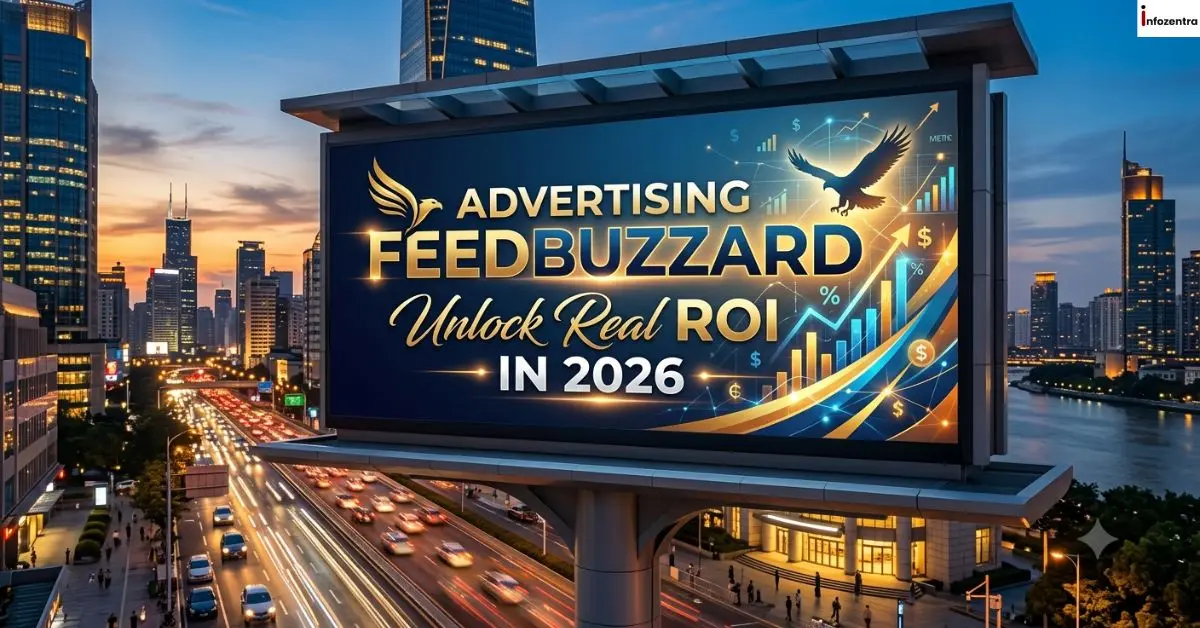
Advertising Feedbuzzard: Unlock Real ROI in 2026
Digital marketing keeps shifting every year, and businesses are always searching for smarter ways to reach the right audience without wasting their budget.
This is exactly where Advertising Feedbuzzard comes into the picture. Built around audience targeting, real-time analytics, and flexible campaign management, it gives brands a practical path toward measurable growth instead of guesswork.
In this detailed guide, we will walk through what Advertising Feedbuzzard is, how it fits into the wider world of digital marketing, what features make it useful, and how businesses of every size can use it to unlock real ROI in 2026.
Also Read: FTAsiaFinance Stock Analysis: Trends & Outlook 2026
What Is Advertising Feedbuzzard?
Advertising Feedbuzzard is best understood as a content discovery platform that blends content aggregation with native advertising. Instead of interrupting users with random pop-ups or generic banner ads, it places promotional material inside feeds, recommendation streams, and scrolling experiences where people are already spending their time.
This approach is often called feed-based advertising. Ads appear alongside organic content, which makes them feel less disruptive and more like something the audience would naturally scroll past and engage with.
Because the platform also functions as a content discovery platform, advertisers benefit from being shown next to material that users are already interested in, rather than fighting for attention in an unrelated environment.
How Advertising Feedbuzzard Fits Into Modern Digital Marketing
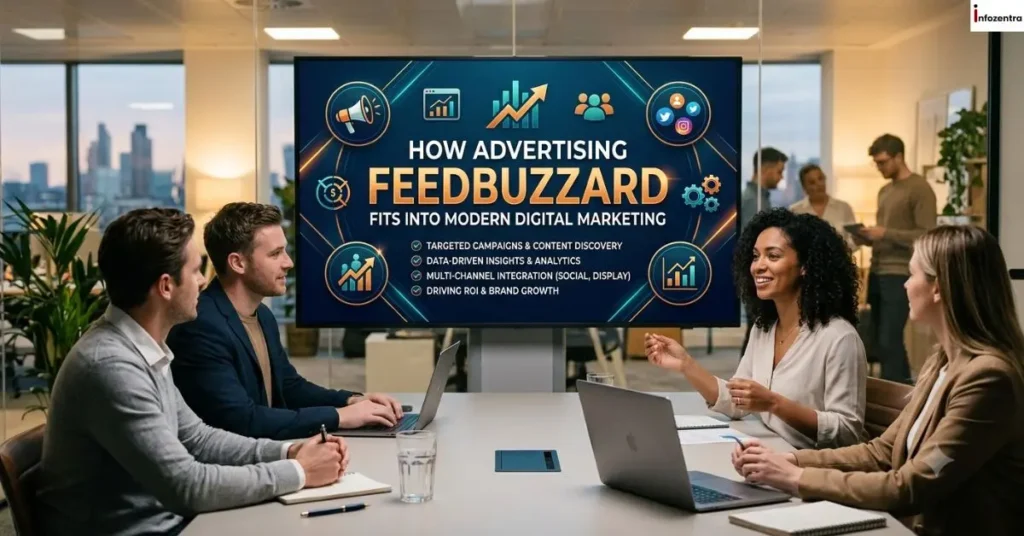
Digital marketing today is not just about buying ad space. It includes content marketing, search engine optimization (SEO), social media marketing, influencer collaborations, and performance-based marketing working together.
Advertising Feedbuzzard sits comfortably inside this bigger picture because it supports multi-channel advertising rather than working in isolation.
A brand running a campaign through Advertising Feedbuzzard can still use content marketing to build authority, rely on SEO to improve organic visibility, and combine that with paid placements for faster results.
This mix of organic and paid effort is often what separates a campaign that quietly fades away from one that builds long-term brand awareness and customer acquisition.
Why Advertising Feedbuzzard Beats Traditional Display Advertising
Traditional display advertising, like static banner ads placed randomly across websites, often gets ignored. People have learned to scroll past anything that looks like an obvious ad. Advertising Feedbuzzard takes a different route by using native content and sponsored posts that blend naturally into the reading experience.
Because the content feels native, audience engagement tends to be higher, and organic engagement metrics like click-through rate (CTR) usually improve compared to standard banner placements.
This does not mean banner ads disappear entirely — they still have a role for basic brand visibility — but native formats generally outperform them when the goal is deeper engagement or sales conversion.
Also Read: PedroVazPaulo Business Consultant: Smart Strategies for 2026
Key Features of Advertising Feedbuzzard
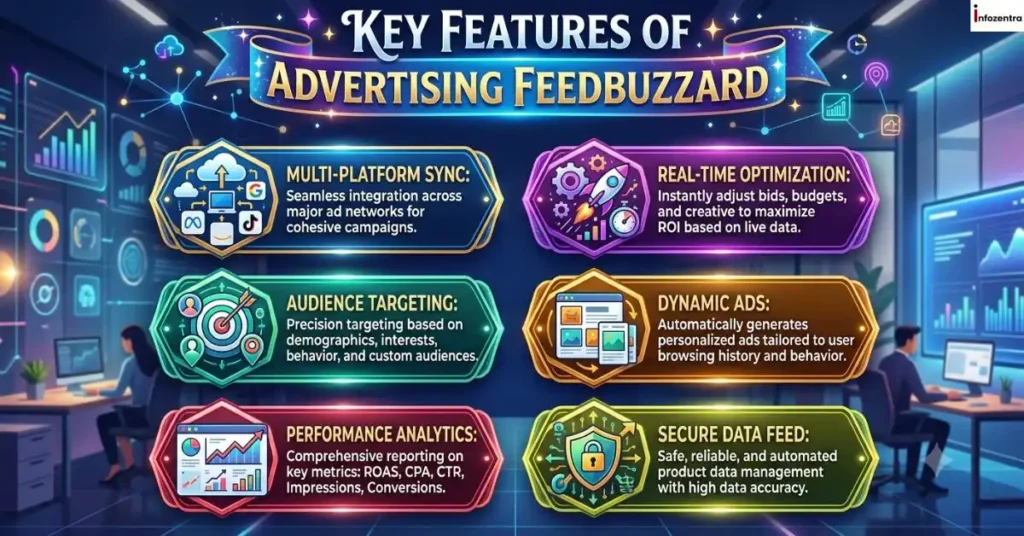
Advanced Audience Targeting Capabilities
One of the strongest parts of Advertising Feedbuzzard is its targeting engine. Marketers can filter their audience using demographic targeting, geographic targeting, behavioral targeting, and interest-based targeting.
This level of audience segmentation means ads are shown to people who are statistically more likely to care about the product or service being promoted, instead of being blasted out to a random, disinterested crowd.
Narrower targeting also protects budget management. When a campaign is aimed at a genuine niche audience instead of a broad, undefined group, cost per acquisition (CPA) tends to drop because fewer impressions are wasted on people who were never going to convert.
Real-Time Analytics and Performance Tracking
Instead of waiting days or weeks to know if a campaign is working, advertisers get real-time analytics that track performance as it happens. This includes impression analytics, click-through rate, conversion rate, and other engagement metrics that update continuously.
This kind of live performance tracking is valuable because it allows marketers to catch problems early. If an ad is underperforming, a business does not have to wait until the end of a campaign cycle to notice — the dashboard analytics make it visible almost immediately, which supports faster decision-making and better ROI optimization overall.
Advertising Feedbuzzard Flexible Pricing Models
Every business has a different budget, and Advertising Feedbuzzard generally supports more than one pricing structure.
Common options include cost-per-click (CPC), where payment happens only when someone clicks, and cost-per-impression (CPM), where payment is based on how many times an ad is shown. Some setups also offer a subscription plan for businesses that want to run ongoing campaigns with a fixed monthly or yearly cost.
This flexibility matters because a small business testing the waters with a modest daily budget can still access the same core targeting tools as a larger company running a bigger multi-channel advertising strategy.
Multiple Ad Formats and Creative Options

Nobody wants to look at the same generic ad format over and over. Advertising Feedbuzzard typically supports sponsored articles, sponsored posts, native content, banner ads, video advertisements, and interactive elements like polls or quizzes.
Having access to several ad creatives at once makes it easier to match the format to the campaign objective — a video advertisement might work better for brand storytelling, while a sponsored post can go deeper into product details for lead generation.
Offering multiple formats also supports creative testing, since marketers can compare how each version performs before committing a larger daily budget to one specific direction.
Metrics That Matter in Advertising Feedbuzzard Campaigns
Tracking too many numbers at once can be distracting and can actually slow decision-making down. For most Advertising Feedbuzzard campaigns, the metrics that matter most include:
- Click-through rate (CTR)
- Conversion rate
- Cost per acquisition (CPA)
- Return on ad spend (ROAS)
- Engagement metrics such as shares, comments, and time spent
- Customer lifetime value (LTV) of the people acquired through the campaign
These numbers together tell a much clearer story than any single metric on its own. A high CTR with a low conversion rate, for example, usually points to a landing page optimization problem rather than a targeting problem.
How to Get Started With Advertising Feedbuzzard
Getting started does not require deep technical knowledge. A typical setup process looks like this:
- Create your account through the self-serve dashboard and add your basic business information.
- Define your campaign objectives — brand awareness, lead generation, website traffic, sales conversion, or app downloads.
- Set up audience targeting based on demographic targeting, geographic targeting, and interest-based targeting.
- Build your ad using campaign templates, clear ad copy, and a strong call-to-action (CTA).
- Set your daily budget and campaign scheduling so ads run at the times your audience is most active.
- Launch and monitor results through the dashboard analytics as the campaign runs.
Having clear campaign objectives before you even open the dashboard makes every later decision — targeting, budget, and ad creatives — much easier to get right the first time.
Advertising Feedbuzzard Pricing Models Explained
Understanding pricing models is a big part of budget management. With cost-per-click (CPC), you only pay when someone actually clicks your ad, which usually works well for lead generation and website traffic campaigns.
With cost-per-impression (CPM), you pay based on how many times your ad is displayed, regardless of clicks, which fits campaigns focused mainly on brand awareness. A subscription plan can also make sense for businesses that want predictable, ongoing costs instead of variable spend.
Choosing between these pricing models comes down to your specific campaign objectives — a business chasing quick sales conversion will likely lean toward CPC, while one building long-term visibility might prefer CPM or a subscription plan.
Advertising Feedbuzzard for SEO: Guest Posts, Backlinks, and Link Building
Beyond paid placements, some content discovery platforms — including sites operating in this Advertising Feedbuzzard space — also offer guest posting opportunities as part of a wider link building strategy.
Businesses can pay for a guest post that includes a backlink, which may help improve their domain authority (DA) over time when done on a site with reasonable editorial standards.
Before paying for this kind of placement, it is worth checking a few things:
- Ask for a media kit or rate card so you know exactly what you are paying for.
- Confirm there are published editorial standards, since a site with no editorial process at all often behaves more like a content farm than a trustworthy publisher.
- Verify domain authority independently using a third-party SEO tool rather than trusting a single listing.
Used carefully, this side of Advertising Feedbuzzard can support your broader search engine optimization goals, but it should be treated as one piece of a strategy — not a shortcut that replaces real content marketing.
Industry Applications of Advertising Feedbuzzard
E-commerce and Retail
Online stores can use video advertisements and native content to showcase products in a way that feels far more natural than a plain product listing. Seasonal campaigns tied to shopping events, paired with direct links to product pages, tend to shorten the path between discovery and sales conversion.
SaaS and B2B Marketing
For software companies, Advertising Feedbuzzard can support B2B marketing by targeting decision-makers directly through interest-based targeting and behavioral targeting.
Sponsored posts that explain a product in more depth often work better here than a short banner ad, since B2B buyers usually need more information before converting.
Local and Service-Based Businesses
Geographic targeting makes Advertising Feedbuzzard useful for local business advertising too. A local restaurant, clinic, or service provider can narrow their audience down to a specific city or neighborhood, which keeps the campaign relevant to a genuine niche audience instead of spreading a small budget too thin across an entire country.
Advanced Strategies to Maximize ROI With Advertising Feedbuzzard
- Lean on data-driven targeting. Let real performance data, not assumptions, decide which audience segments get the most budget.
- Run consistent A/B testing. Test one variable at a time — headline, image, or CTA — so you know exactly what caused a change in results.
- Use personalized content. Ads that speak directly to a specific audience segment usually outperform generic, one-size-fits-all messaging.
- Apply bid adjustment strategically. Increase bids during peak engagement windows and pull back when performance metrics show a campaign losing efficiency.
- Keep brand consistency across formats. Whether it’s a sponsored article, a banner ad, or a video advertisement, consistent visuals and tone help build trust over repeated exposures.
- Optimize the landing page, not just the ad. A strong ad sending traffic to a slow or confusing landing page will always underperform, no matter how good the targeting is.
The Role of AI and Automation in Advertising Feedbuzzard
Artificial intelligence in marketing is becoming a standard part of how platforms like this operate. Automation tools can handle repetitive tasks such as adjusting bids, testing ad creatives, and refining audience segmentation in real time, which frees up marketers to focus on strategy instead of manual adjustments.
This shift toward data-driven targeting and automation tools is also what makes personalized content possible at scale. Instead of manually building dozens of ad variations, automation can test and rotate creatives automatically, keeping campaigns fresh without demanding constant hands-on work.
Common Mistakes That Hurt Advertising Feedbuzzard Campaigns
Many businesses lose money not because the platform fails them, but because of avoidable mistakes:
- Targeting an audience that is too broad instead of a focused niche audience
- Increasing daily budget too quickly before a campaign has been properly tested
- Ignoring mobile optimization, even though most users browse on phones
- Using weak or generic ad copy that fails to include a clear CTA
- Skipping A/B testing and creative testing altogether
- Focusing only on clicks instead of tracking real sales conversion and customer lifetime value
Fixing even one or two of these issues can noticeably improve engagement metrics and overall ROI optimization.
Advertising Feedbuzzard vs Traditional Advertising
Traditional advertising, like static billboards or generic display advertising, often lacks precise targeting and any form of real-time feedback. Advertising Feedbuzzard, by comparison, is built around data-driven targeting, personalized content, and continuous performance tracking.
This makes it far easier for businesses of any size — from local business advertising to large-scale e-commerce advertising — to make faster, evidence-based decisions instead of relying on assumptions or one-time creative instincts.
My Final Thoughts:
Advertising Feedbuzzard brings together audience targeting, real-time analytics, and flexible pricing models to help businesses run smarter campaigns instead of expensive guesswork.
Real ROI does not come from spending more money — it comes from clear campaign objectives, disciplined budget management consistent A/B testing, and using performance data the right way.
For businesses ready to unlock real ROI in 2026, the formula stays simple: define your goals, target the right audience, test constantly, keep your creative and landing pages aligned, and let the data — not guesswork — guide every decision.
FAQs
What is Advertising Feedbuzzard?
Feedbuzzard is a digital advertising platform that lets businesses run paid ads to reach their target audience, helping boost brand visibility and drive traffic.
How do I start advertising on Feedbuzzard?
You can start by creating an account on Feedbuzzard, selecting your target audience, setting your budget, and uploading your ad creatives — the process is generally simple and beginner-friendly.
What kind of ROI can I expect from Feedbuzzard advertising?
ROI depends on factors like your niche, targeting strategy, and ad quality, but with proper optimization, Feedbuzzard can deliver real traffic and conversions that justify your overall marketing spend.
Is Feedbuzzard suitable for small businesses?
Yes, Feedbuzzard offers flexible budget options, making it accessible for small businesses and startups looking for results without a large ad spend.
What makes Feedbuzzard advertising stand out from other platforms?
Feedbuzzard focuses on targeted reach, cost-effective pricing, and real-time performance tracking, making it appealing to marketers who want measurable growth.
About the Author