Software Ralbel28.2.5 Issue: Causes & Solutions
Anyone who has faced sudden crashes, frozen screens, or a program that simply refuses to load properly right after an update already knows how frustrating the Software Ralbel28.2.5 Issue can be.
This problem doesn’t stick to one device or one operating system, which makes it even more confusing for users trying to figure out what went wrong.
The good news is that the Software Ralbel28.2.5 Issue follows a fairly predictable pattern, and once you understand the root cause, fixing it becomes a straightforward process rather than random guesswork.
This article walks through everything related to the Software Ralbel28.2.5 Issue, including its symptoms, the reasons behind it, step-by-step fixes, and simple habits that help prevent it from happening again.
Also Read: Dorgenven New Released: Version, Features & Release Date
What Is the Software Ralbel28.2.5 Issue?
The Software Ralbel28.2.5 Issue is essentially a software malfunction that appears when internal components inside the application stop matching properly after a version update or a configuration change.
This mismatch can be triggered by corrupted system files, an interrupted installation, or outdated dependencies that were never updated alongside the rest of the program.
Version 28.2.5 introduced deeper changes to core program files and internal resource handling compared to earlier releases, which is exactly why this update caused more disruption than previous ones. Once these foundational areas are affected, the problems tend to cascade across the entire application rather than staying isolated.
Common Symptoms of the Software Ralbel28.2.5 Issue
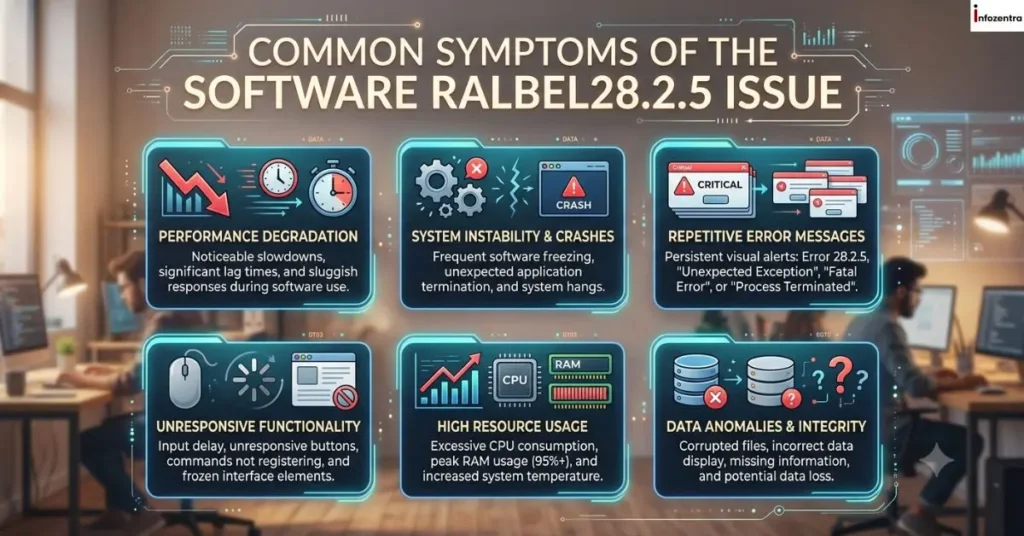
Recognizing the symptoms early makes it much easier to apply the right fix. Most users dealing with the Software Ralbel28.2.5 Issue report a combination of the following:
- Sudden application crashes during normal, everyday use.
- Extended load times that weren’t present before the update.
- Unusually high CPU spikes and rising RAM usage.
- Plugins or extensions that worked fine before suddenly failing to load.
- A failed installation loop, where the software stalls halfway through or keeps attempting to reinstall itself.
- Database syncing issues or transaction failures in more severe cases.
If two or more of these symptoms appear together, there’s a strong chance you’re dealing with the Software Ralbel28.2.5 Issue rather than an unrelated system error.
Also Read: Beaconsoft Latest Tech Info: Top Technology Trends for 2026
Root Causes Behind the Software Ralbel28.2.5 Issue
Understanding the triggering event behind this problem is key to choosing the right solution. Based on common patterns, the main causes generally fall into a few categories.
Corrupted Files and Incomplete Installation
A corrupted or incomplete installation is the most frequent trigger of the Software Ralbel28.2.5 Issue. If the update process was interrupted — due to a power loss, dropped internet connection, or low storage space — some files may end up missing or damaged. The application simply cannot function properly with half-installed components sitting in its system.
Dependency Conflicts and Mismatched Versions
Applications typically rely on external libraries and frameworks to function correctly. When these dependencies are outdated or mismatched with version 28.2.5, dependency conflicts start showing up, often leading directly to crashes or failed processes.
Configuration Drift and Configuration File Conflicts
Sometimes even a small change in settings — like an altered API endpoint or a modified timeout value — is enough to confuse the program. This configuration drift can create a cascading failure, especially when older custom settings clash with the new application logic introduced in the update.
Plugin Overload and Plugin Conflicts
Incompatible add-ons or extensions trying to run the same task simultaneously often fight with each other in the background, which can directly trigger the Software Ralbel28.2.5 Issue. This is particularly common on systems where multiple third-party plugins are installed at once.
Resource Bottlenecks
Devices with limited RAM or storage space struggle the most with the increased resource demands introduced in version 28.2.5. If your system was already running close to capacity, this update may have simply pushed it past its limit.
Also Read: Tech Guru WaveTechGlobal: Latest Guide, Tips & Tech Updates
Which Systems Are Most Affected by the Software Ralbel28.2.5 Issue?
Not every environment experiences this problem equally. Chrome-based environments, where browser integrations communicate directly with the application, tend to see the highest failure rates — partly due to ongoing browser extension compatibility challenges tied to changes like Manifest V3.
Lightweight operating systems that lack full dependency support are also more vulnerable, and users running less common enterprise Linux distributions should double-check library compatibility before upgrading. Similarly, devices with under 4GB of RAM or limited storage are far more likely to struggle once resource demands increase.
Also Read: What Is Moxhit4.6.1 Software About? Complete Guide 2026
Step-by-Step Guide to Fix the Software Ralbel28.2.5 Issue
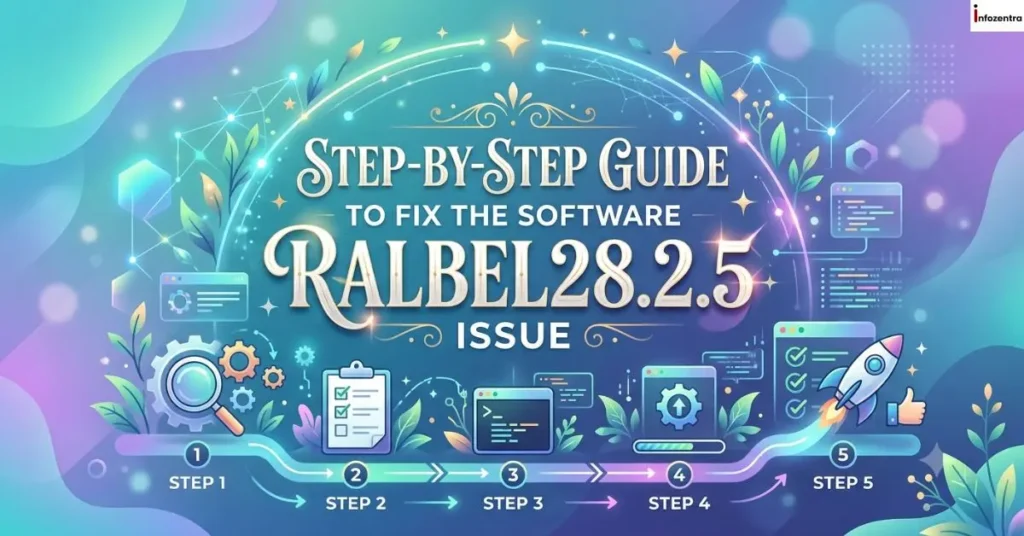
Rather than jumping straight into complex repairs, it’s best to follow a structured, escalating approach — starting with the simplest steps and only moving forward if the problem persists.
Stage 1: Quick, Non-Invasive Fixes
- Basic Restart – Restart your device to clear temporary memory issues and minor system hangs.
- Identify the Trigger – Figure out whether the issue started right after an update, a new plugin installation, or a settings change.
- Check for Updates – Installing pending updates often replaces outdated modules and resolves known dependency conflicts.
- Check Storage Space – Free up disk space, since resource bottlenecks caused by a full system are a common hidden trigger.
Stage 2: Targeted Repair and Mid-Level Maintenance
If the quick fixes don’t resolve the Software Ralbel28.2.5 Issue, move on to more targeted steps:
- Correct Misaligned Settings – Compare your current configuration with recommended parameters and document what needed correction.
- Reset Settings to Default – If the configuration seems too complex to fix manually, resetting everything back to default often resolves the conflict.
- Remove New Add-Ons – If symptoms appeared right after installing a new plugin, disable or remove it to rule out plugin conflicts.
- Clear Cache and Temporary Files – Stale cached data is a silent but common cause of instability, so clearing it can refresh how the program loads.
- Repair Program Files – Use your device’s built-in repair function to restore damaged components without deleting personal data.
Stage 3: Permanent Fix and System Validation
These steps are meant for the most stubborn cases where earlier attempts haven’t worked.
- Detect Underlying Performance Weaknesses – Examine resource graphs and system performance logs to identify CPU spikes or memory leaks that might be driving the issue.
- Clean Reinstall – Completely uninstall the software, delete residual files and old cache folders, restart your system, and then install the latest version from a trusted source. This ensures every damaged component is replaced with clean files.
- Validate System Recovery – After reinstalling, run stress tests and validation checks to confirm every feature is working correctly, and document the full solution for future reference.
- Rollback as a Last Resort – If nothing else works, rolling back to version 28.2.4 or the last known stable release restores a working system, even though it means missing out on the newest features and security updates.
Why Version 28.2.5 Broke More Than Previous Updates
Earlier Ralbel releases mostly involved surface-level tweaks, but version 28.2.5 restructured core program files, changed how drivers and dependencies are loaded, and modified internal resource allocation.
These are foundational, deep-level changes, and when something breaks at that level, the effects ripple across the entire application rather than staying contained.
| Changed Area | What Breaks |
|---|---|
| Core program files | File corruption and sudden crashes |
| Dependency loading | Conflicts with older plugins and libraries |
| Resource allocation | Memory leaks and unexpected process termination |
How to Verify an Official Patch or Vendor Hotfix
Before installing any fix, it’s worth confirming whether the developer has already released an official patch or vendor hotfix for the Software Ralbel28.2.5 Issue. Check official support channels rather than relying on random forum links, since installing files from an unofficial website can introduce new instability or even malware.
A legitimate hotfix is usually accompanied by clear release notes explaining exactly what has been changed or corrected.
How to Prevent the Software Ralbel28.2.5 Issue in the Future
Prevention is always easier than troubleshooting after the fact. A few simple habits can significantly reduce the chances of running into this problem again:
- Keep Everything Updated – Mismatched dependency versions remain the single biggest cause of post-update failures, so keeping your operating system, drivers, and supporting software current is essential.
- Test Before Deployment – Never apply major updates directly to your primary production system. Test them first in a virtual machine or staging environment.
- Avoid Unofficial Sources – Stick to official release channels and avoid unofficial patches or download links, which often introduce more problems than they solve.
- Monitor System Performance – Regularly reviewing performance logs and setting up monitoring alerts helps catch unusual CPU spikes or memory behavior before they turn into a full crash.
- Maintain Backups – Always backup your configuration settings and important files before installing any major software patch, so you have a restore point if something goes wrong.
- Watch Community Feedback – Keeping an eye on technical forums can reveal whether other users are already reporting the same issue right after a release, which is often a sign to wait for a vendor patch before updating.
My Final Thoughts:
The Software Ralbel28.2.5 Issue is a manageable technical problem rather than a serious crisis, as long as it’s approached with a clear, structured process instead of random troubleshooting.
By starting with simple, non-invasive fixes and only escalating to a clean reinstall or rollback when truly necessary, most users can restore stability without unnecessary stress.
Combined with a few consistent prevention habits, this approach not only resolves the current Software Ralbel28.2.5 Issue but also reduces the likelihood of running into similar problems with future updates.
FAQs
What is the Software Ralbel28.2.5 Issue?
The Software Ralbel28.2.5 Issue refers to problems users may experience with version 28.2.5, such as installation errors, crashes, compatibility issues, slow performance, or unexpected system behavior.
What causes the Software Ralbel28.2.5 Issue?
Common causes include outdated system drivers, corrupted installation files, software conflicts, missing updates, insufficient system resources, or incompatible operating system versions.
How can I fix the Software Ralbel28.2.5 Issue?
You can try reinstalling the software, updating your operating system, installing the latest patches, clearing temporary files, checking system compatibility, and restarting your device. If the issue continues, contact the software’s official support team.
Does updating the software resolve the Ralbel28.2.5 Issue?
In many cases, installing the latest available update or patch can fix known bugs, improve stability, and resolve compatibility problems. Always use updates from official sources.
How can I prevent the Software Ralbel28.2.5 Issue in the future?
Keep your software and operating system up to date, install updates from official sources, maintain sufficient storage space, regularly scan for malware, and back up important data before major software updates.
About the Author